
Hair transplant surgery is a structured medical procedure that restores hair growth in areas affected by thinning or baldness. People searching for hair transplant India usually want clarity on how the procedure works, whether it is permanent, and what recovery looks like.
Modern hair restoration focuses on redistributing healthy hair follicles from dense areas of the scalp to thinning or bald regions. The goal is natural hairline reconstruction that blends seamlessly with existing hair.
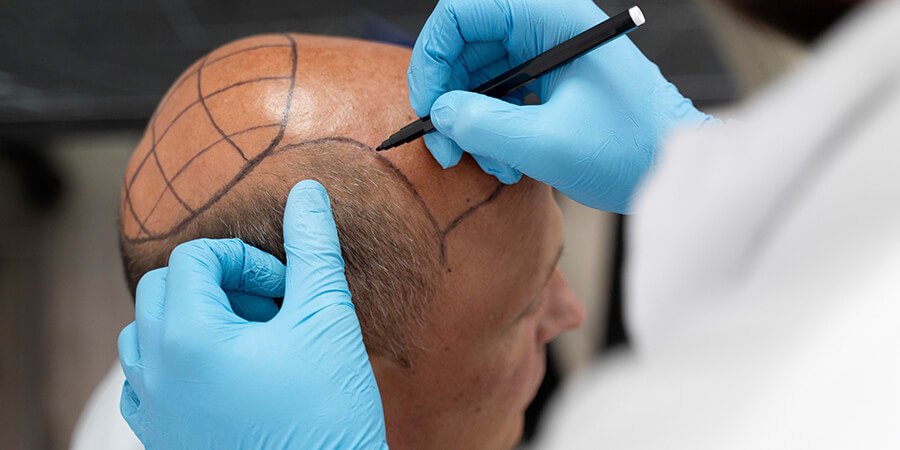
Pre-Surgical Evaluation and Hairline Planning
The procedure begins with a detailed scalp assessment. The surgeon evaluates hair loss pattern, donor area density, hair texture, and future hair loss progression. This step is critical for achieving long-term results.
Hairline design is planned carefully based on facial structure, age, and gender. A well-designed hairline ensures the transplant looks natural even years later.
Anaesthesia for Hair Transplant Surgery
Hair transplant surgery is performed under local anesthesia. The scalp is numbed so the patient remains comfortable and pain-free throughout the procedure.
Patients stay awake but relaxed, and vital signs are monitored continuously.
Have questions or want to get started? We are ready to help you with a smile!
Donor Area Preparation
The donor area, usually at the back or sides of the scalp, contains hair follicles resistant to hair loss. This area is trimmed and prepared under sterile conditions.
Healthy follicles from this donor area are used for transplantation because they retain their growth characteristics even after relocation.
FUE Hair Transplant Steps
In FUE hair transplant India, individual hair follicles are extracted one by one using specialised micro instruments. These graft extraction steps minimise scarring and allow faster healing compared to older methods.
Each graft is examined carefully to ensure root survival before implantation.
FUT Strip Method (Selected Cases)
In some cases, the FUT strip method India may be recommended. A thin strip of scalp is removed from the donor area, and follicles are separated under magnification.
This method may be chosen when a large number of grafts are needed.
Recipient Site Creation
Tiny channels are created in the bald or thinning areas using precise angles and directions. This recipient site creation determines how natural the final result will look.
The orientation of each site mimics natural hair growth.
Graft Implantation Technique
During the implantation technique, extracted grafts are placed into the prepared sites. Each graft is positioned carefully to ensure optimal blood supply and root survival.
This stage requires patience and precision to avoid damage to follicles.
Completion and Immediate Aftercare
Once implantation is complete, the scalp is cleaned and dressed. The entire procedure can take several hours depending on the number of grafts.
Patients are given detailed instructions on washing, sleeping position, and medications.
Hair Transplant Recovery Timeline
Understanding the hair transplant recovery timeline helps patients manage expectations.
Typical recovery includes:
- Mild swelling for a few days
- Small scabs forming and shedding within 7 to 10 days
- Transplanted hair shedding temporarily in the first month
- New hair growth starting around 3 to 4 months
Full results are usually visible between 9 to 12 months.
Long-Term Results of Hair Transplantation
Hair transplant surgery offers permanent results because transplanted follicles are genetically resistant to hair loss. Once growth stabilises, hair behaves like natural scalp hair and can be cut or styled normally.
Proper care supports long-term success.
Consult Dr Meghna for Hair Transplant Surgery
If hair thinning or baldness is affecting your confidence, hair transplant surgery may be a reliable solution. A consultation with Dr Meghna allows personalised assessment, realistic expectations, and careful planning for natural outcomes.
Restoring hair also restores confidence.
FAQs About Hair Transplant Surgery
Hair transplant surgery is considered permanent because follicles are taken from areas resistant to hair loss. While surrounding native hair may thin with age, transplanted hair usually continues to grow for life.
Yes. When hairline design, angle, and graft placement are done correctly, the results look completely natural. Most people cannot tell a transplant was done once growth is complete.
The procedure itself is painless due to anaesthesia. Mild soreness or tightness may occur afterward but is usually minimal and temporary.
New hair growth typically begins around three to four months after surgery. Hair continues to thicken and mature over the next several months, with final results visible by one year.
Some patients achieve the desired density in one session, while others may need additional sessions depending on hair loss severity and donor availability. This is discussed during consultation.
Yes. Hair transplant surgery is suitable for women with thinning hair or pattern hair loss when the donor area density is adequate. Evaluation helps determine suitability.